

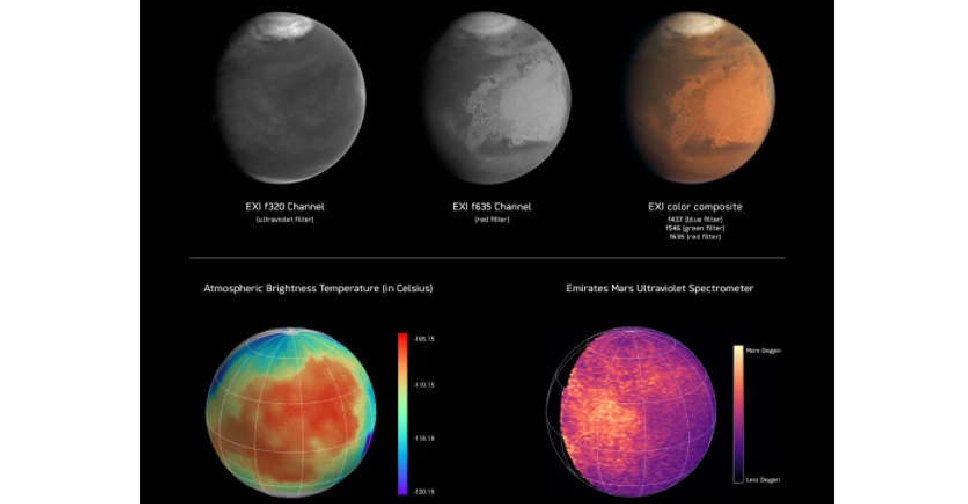
It will be a year since the Emirates Mars Mission, the first interplanetary exploration undertaken by an Arab nation, blasted off from Japan's Tanegashima Space Centre to space.
The historic moment was clocked at 1:58 am (UAE time) on July 20, 2020.
The mission has exceeded its anticipated performance, encompassing a range of additional activities and freeing up valuable resources to perform additional observations.
"We’ve had quite a lot of ‘wiggle room’ in addition to our planned parameters and our confidence in our spacecraft has gone from strength to strength," highlighted EMM Project Director Omran Sharaf.
"We were able to cut the number of trajectory correction manoeuvres, perform additional observations during our flight to Mars and now have added a whole area of scientific study to the mission that I can only describe as a ‘bonus’. It has been a very busy year indeed for Hope!"
EMM’s Emirates Mars Ultraviolet Spectrometer (EMUS) instrument was activated during Hope’s cruise to Mars and used to image Mars’ exospheric hydrogen.
"These experiments were possible simply because Mars Hope was in such good shape," Hessa Al Matroushi, EMM’s Science Lead highlighted.
The dust tracking feature of Mars Hope’s star tracker instruments was also enabled, allowing measurements of interplanetary dust in the wake of Mars as it spins around the sun.
With the successful Mars Orbit Insertion (MOI) manoeuvre taking place on February 9, the Mars Hope spacecraft transitioned to its orbit on March 23 with its last scheduled ‘big burn’ of its six Delta-V thrusters.
The probe’s three instruments were activated on April 10 and a period of commissioning and testing followed, before the mission’s science phase formally commenced on May 23.
It was during this period that the EMM science team first made the stunning observations of Mars’ discrete aurora, releasing the first global images of Mars discrete aurora in the far-ultraviolet, and providing new insights into the discrete phenomenon.
"Mars’ aurorae are an area of intense interest to the global scientific community and their study has tremendous potential to challenge, expand and deepen our understanding of Mars’ atmosphere and its interaction with the planet and with solar energies," said Al Matroushi. "We were hopeful that EMUS could make a contribution in this area but we now know with absolute certainty that contribution is going to be ground breaking."
Hope Probe will complete one orbit of the planet every 55 hours and will capture a full planetary data sample every nine days in its two-year mission to map Mar’s atmospheric dynamics.
Science data from the mission will be released globally with no embargo, following a period of validation and checking, in October.
The Hope Probe’s historic journey to the Red Planet coincides with a year of celebrations to mark the UAE’s Golden Jubilee.


 UAE President accepts US invitation to join Board of Peace
 UAE strongly condemns terrorist attack in Kabul
 Sheikha Latifa holds bilateral talks with Bahraini delegation at World Economic Forum
 Sharjah Ruler approves 1,000 jobs, new scholarships
 UAE named among top 10 global super powers for fourth year in a row
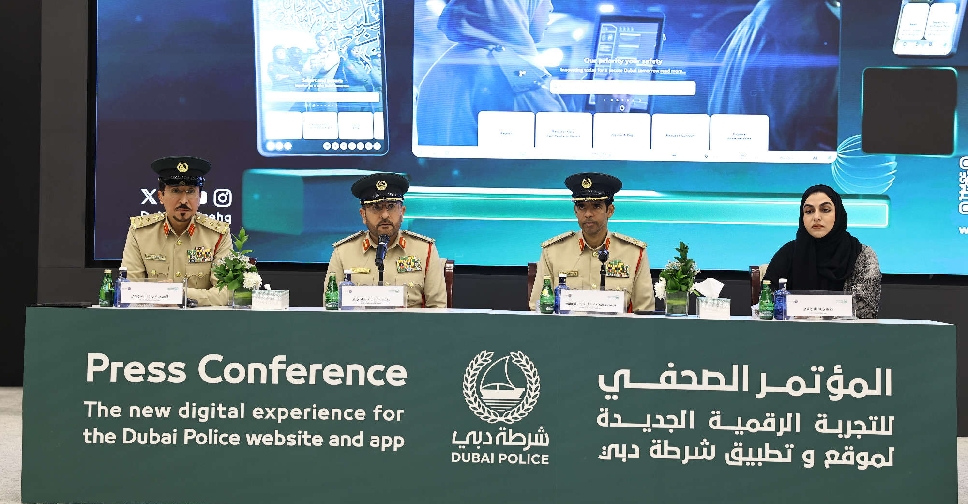 Dubai Police boost digital services under zero‑bureaucracy drive
 Dubai streamlines replacement of foreign driving licences
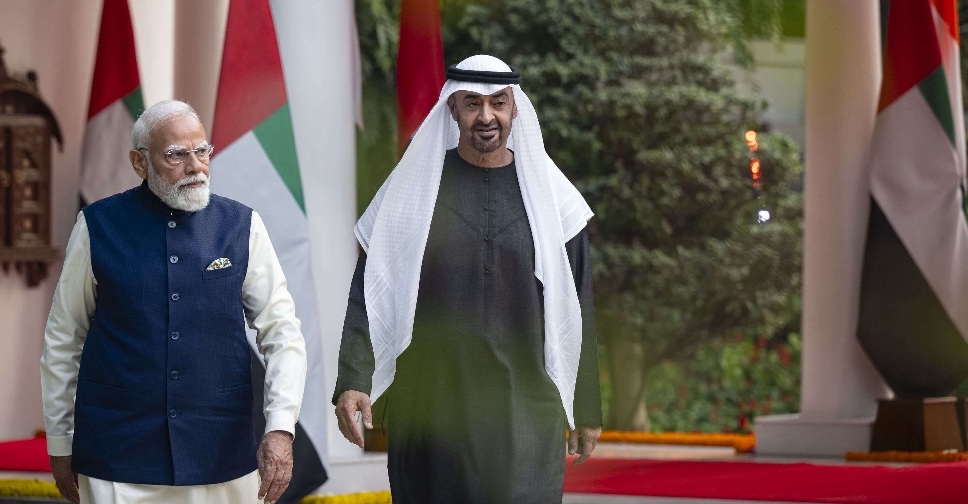 UAE President and Indian PM discuss strategic ties, wider cooperation
 UAE rejects Yemeni governor's allegations on weapons, 'secret prisons'
 New agreements boost UAE–India partnership
 UAE expresses solidarity with Spain over deadly train collision
 UAE offers condolences to Pakistan over deadly mall fire
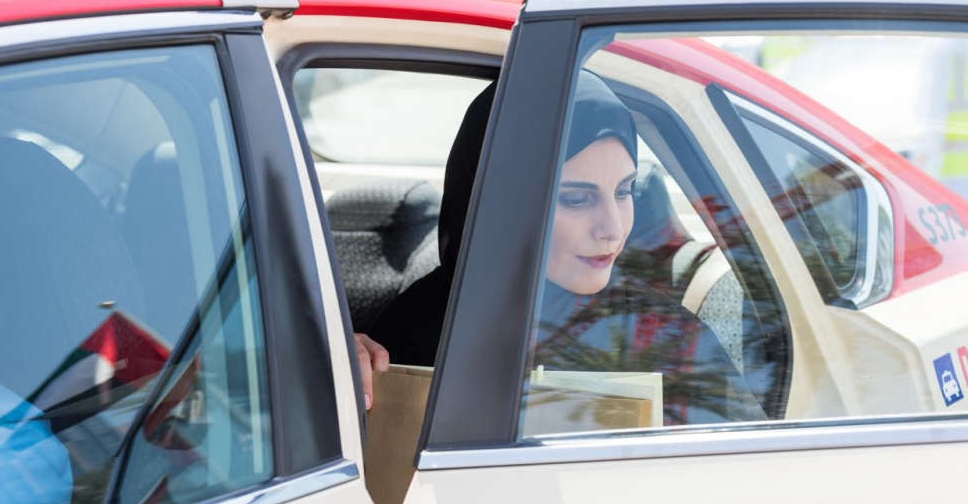 Over AED 2 million in lost cash recovered from Dubai taxis in a year
 Sharjah Ruler unveils new residential neighbourhood in Khorfakkan
 UAE tops global government trust index: H.H. Sheikh Mohammed
 UAE President arrives in India on working visit
 Zayed Award for Human Fraternity reveals 2026 winners
 Dubai expands EV Green Charger network
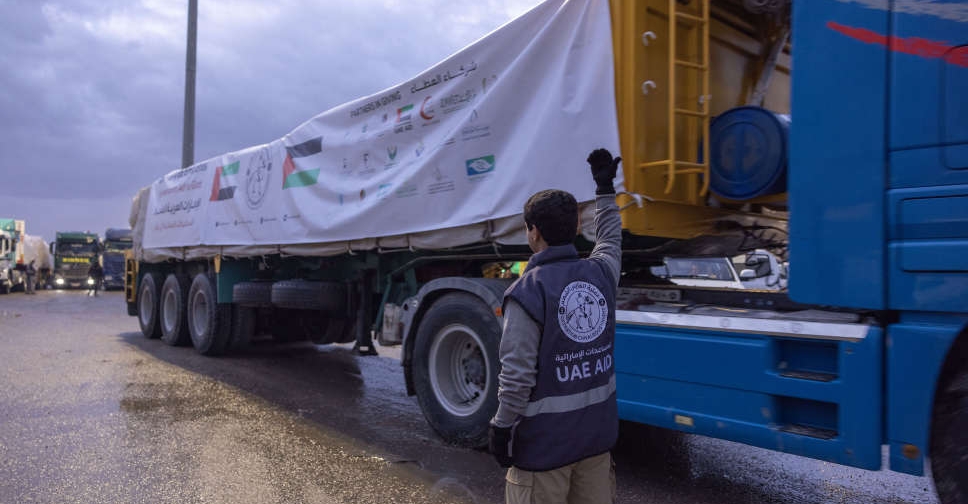 UAE aid convoys continue to deliver crucial aid to Gaza

